Six Things You Can Do To Be More Positive
 These tips won’t cost you a dime. And they’re easy, so time is no excuse!
- Purposefully Breathe. Long breaths in, long breaths out. Repeat them 5 times.
- Turn off your phone. Maybe just for an hour. Watch how much you get done!
- Reward yourself. A hot bath, a walk at lunchtime, music while you cook dinner, 10 pages of your favorite book – all of these ideas will bring a calmness to your life.
- Choose a word every day that lightens the mood and brings soothing thoughts. Beach. Snow. Faith. Peace. Whatever the word is, take time during your day to consciously think about it for a minute or two.
- Get up, walk around, roll your shoulders. The simple act of pushing yourself away from your desk and computer will relax you and make you think differently.
- Thank someone. At home or at work, giving a sincere thanks to someone not only lightens that person’s day, but yours also.
Four Ways To Engage Your Employees

- Listen. Every company has good ideas. The question is, are they recognized? Too often, the good suggestions fall on deaf ears. Even if an idea seems silly, or not doable, before you reject it, let it work itself inside your brain for a while. Often, the best ideas come from where the work is being done.
- Get Feedback From Within. Being recognized by our manager is important, but just as important, and maybe more sincere, is the recognition we get from our colleagues. Start a campaign where employees can recognize the work of others.
- Inform. Sometimes organizations don’t see the need to inform everyone of progress, issues and roadblocks. So instead of knowing what’s going on, employees guess. Or wonder. A thorough understanding of the situation engages employees even more powerfully. Providing information encourages a culture of assistance. Instead of being discouraged, employees are more likely to ask, what can we do to overcome this barrier?
- Involve. No one is expected to have all the answers. Even management can’t possibly have all the answers. Involving employees in decisions is powerful. With involvement comes ownership. Employees work harder to make it happen.
Working Effectively as a Team, Motivating Employees, Building Trust and Integrity – these are just some of the courses we’ve developed for organizations. How can we help you? Give us a call at 301-670-0051. Let us help you put a plan in place to instill a culture of accomplishment in your organization.
Doing What Matters
 Ever since childhood I remember my mom saying:
“Get a good education. That is something that no one can take away from you.”
In my parent’s house, college was mandatory. There were 5 children in the house, and all of us have some level of post high school learning – whether it be a college degree or specific military training. As a matter of fact, my youngest sibling excelled at maintaining the Army’s Black Hawk and served in Desert Storm. We are all so very proud of him.
When I received my MBA, of course my family was proud of me, but actually it felt quite normal. After all, that’s what we were supposed to do! I went on to be adjunct faculty and career counselor. Eventually, I started my own business – and now it’s going on 25 years!
It seems appropriate then, that my business is about educating and training people on how to become an effective leader. We help our clients find “What Matters to Them” and at the same time, I’m “Doing What Matters” to me.
Additionally, as a mentor for high school high achievers, I have seen so many extremely smart and ambitious youth who want to go to college. The problem is that there are very limited resources to take advantage of – short of their parents having to go into deep debt. It was different when I went to college. Then, there was an abundance of FREE college money. Indeed, I went to the University of Maryland – tuition-free! It appears that those days are long gone. So many kids are side-lined from fulfilling their dreams, realizing their purpose, for lack of money.
And so, I have now entered into my Next Life – Director of Let’s Go! In short, I started Let’s Go! as a non-profit in order to provide resources for ambitious and high achieving youth who just don’t have the means to take advantage of post-high school learning as I did. Let’s Go! – a highly competitive program – will not only provide financial resources for these youth, but it will also provide leadership and life skills. I’ve come full-circle. Once again – Doing What Matters. What matters to YOU?
Recognizing Accomplishments
 November has blessed us with some wonderful weather and forceful sunshine! Even if it were not the month that we traditionally give thanks, we might be thankful each time we go out the door. When we really sit down and think about it, we realize that it’s often the littlest things – the things we sometimes take for granted – that we are most thankful for.
I once had a boss who rarely acknowledged accomplishments. He thought accomplishments were expected, and praising an accomplishment might make someone sit back and not work very hard. I’d often shake my head, wondering, what was he thinking! In truth, when we recognize accomplishments, we provide a lift to the person or team we recognize. Instead of sitting back and doing nothing, a little recognition usually makes people work harder! They are grateful – grateful to have a job and grateful that hard work is recognized.
So in this month of November, as the days grow shorter and the year-end approaches, let’s remember the things we can do to celebrate successes. Here’s a list. How many can you practice before December 31st?
- Recognizing success is often about doing what matters. It’s taking your job seriously and performing the work that is important to the mission. Do you have a manager or team leader who has battled through opposition? Or maybe led a team with dignity? Celebrate their success with a hand-written note. A simple Thank You will prove to be a happy diversion for a job well done.
- Celebrating the entire team. Besides the pessimistic boss described above, I also had one that understood how important it was to recognize the team. So he would arrange an event. Something simple. He’d bring in root beer and vanilla ice cream and make root beer floats after lunch! Or he stopped by the donut place and grab a large container of coffee and donuts. Whatever he planned, it came with a public display of recognition. Wow, did that make us feel good!
- Perk up someone’s day with a small card from Starbucks. It might just have $5 on it, but you end up making that person feel good twice – when you give it to them and make note of why he/she deserves it, and when they use the card!
- Set up a Brag Board. This is great if you have a team. Ask them to bring something that can be added to a poster that reminds them of the job they’re working on. Make it known that you want brag on them a little and want visitors to see what’s being accomplished. The board will grow as more contributions come in, making it a topic of interest for a while, and a constant reminder that you wanted to brag!
- Finally, just say it. Say Thank You. Genuinely given, a simple thank you can have as great an impact as any of the other suggestions above.
Need help building a team? Or building a positive culture. Why don’t you give us a call and we’ll get started now so that 2017 becomes the year of achievements for your organization. Give us a call at 301-670-0051.
Planning for the Year Ahead
 Your business plan is essential to the success of your organization. Your plan is your map. It not only describes what you are going to do, but also provides a direction on how you and your team will get there. Without this execution strategy, your plan is meaningless.
Having a solid plan for how your department or organization will run is a key component of its smooth and successful operation. Your plan is critical to achieving success. It’s important to you, your managers and equally important for the staff you lead. Everyone needs to understand how your organization should be run on a daily basis. Your thoughts and expectations should be clearly defined.
Obviously, for smaller organizations, the business will be far more streamlined and less complicated than it is for larger ones, but your plan still needs to demonstrate an understanding of the work required and how you’ll handle the work flow.
So let’s discuss how you can put together a plan that is organized and understood. Your plan should contain the following items.
Mission. Your mission should be clearly defined so that everyone knows what your organization or department does and why you do it. You may be part of a broader mission, but your organization should still have its own mission. A clear and thoughtful mission statement creates a connection with the organization and the people you serve.
Keys to Success. Organizations have a few key factors that lead to success. What are the things your organization must do to be successful? List these factors in your plan.
Analysis of your organization’s position. Think about your organization’s position or circumstances. A good tool to use is a SWOT analysis – Strengths, Weaknesses, Opportunities and Threats. What is the present position of your organization and how does it need to grow, or change?
Description of Services. What are the services you offer to the rest of your organization? A clear description of these services, what they do and the benefits they provide are important. You may provide a variety of services, depending on whether your customers are internal, external or both.
Delivery Requirements. You must define the requirements of the services you will deliver. These requirements may be set by your team or defined by an outside source. In either case, deciding the measurements and stating them within your plan is important to tracking success. Your next step is to define the responsibilities around each step and the tactics you will take to accomplish your goals. These requirements will play a key role in helping you analyze the success of your staff and the organization as a whole.
Implementation Plan. How are you going to carry out your plan to provide the services needed by others? Your plan should be strategic. Each task should bring you closer to accomplishing the plan.
Objectives. There is a reason why you are taking certain steps, or actions. These are the objectives – and should be stated in your plan. The objectives also help to define success factors.
Personnel and Expertise Needs. Your managers and staff carry out most of your plan. It’s important that everyone understands his or her responsibilities, as well as the qualifications for doing the job. Our next article provides more detail on roles and responsibilities within the plan.
Leah M. Joppy & Associates would like to be your partner in your strategic plan. We provide training – training for leadership, professional and personal development, and many different types of computer training. Give us a call at 301-670-0051 and let us help you achieve faster results with your team.
Tips for Conveying the Structure of Your Organization
 The business plan often starts with an organization chart. The structure of the group may grow with time, or responsibilities may be tweaked, but start with a basic plan.
- One way to explain your organizational structure in the business plan is graphically. A simple diagram or flowchart can easily demonstrate levels of management and the positions within them, clearly illustrating who reports to whom, and how different divisions of the company or organization relate to each other.
- Roles and responsibilities. Of course, you need to surround yourself with good people, but you also have to set things up to enable them to work well with each other and on their own. It’s one thing to have an organizational chart, but another to have the skills needed to carry out your mission. You must define the people who will be providing the service. Who is responsible for what job, and to whom do they report?
- Training needed. The plan should also include a description of the training that will be needed to accomplish your mission.
- Adding talent. It’s important to recognize the types of people you’ll need, how many, what their qualifications should be, where you’ll find them, and what they’ll cost. If your organization plans to use outside consultants, freelancers, or independent contractors, mention this need in your plan as well.
- Future expansion. It’s also helpful for long-range planning to discuss positions and experience you want to add in the future – if you are successful enough to expand.
We can help organizations reach goals by providing the training needed for employees to succeed. Look to Leah M. Joppy & Associates for leadership, personal development and computer training. We help break down barriers to productivity. Give us a call at 301-670-0051 and let us help you achieve faster results with your team.
Connecting With People
 In this fast paced world of email and text messaging, we somehow leave out the “connecting” part of our communications. And yet, the connecting part is very important to our own success. How we relate to others, and communicate our desires, makes a huge difference on how the message is received. Have you ever noticed that HOW we are asked to do something, either makes us excited to do it, or makes us roll our eyes and dread the project? It’s all about understanding how human behavior works. We can elevate the performance of those around us if we CONNECT.
In your job, and in your future. Recently I read an article about being a successful entrepreneur. The author mentioned that one of the keys to success revolves around the network of the business owner. Those owners who had a more varied network, with closer ties, were more successful. It wasn’t the NUMBER of contacts that determined the success of the owner, but rather the variety of contacts and the depth of the relationships. Some of the most successful entrepreneurs had close contacts in many different areas – people with whom they could discuss problems, or bounce around some ideas. The sincere advice that was given from this network helped the business owner find answers to various problems.
Not a business owner. Whether you work for the government or have a job in corporate America the concept of keeping close ties with a varied list of contacts is not a bad idea. Even retiring successfully and happily may be influenced by your circle of contacts.
Are you listening? When we truly connect with someone, even if it’s someone we’ve just met, the person we’re talking to feels involved. The connection is subtle. Our body language gives us away. Sometimes I see it at networking events. I’m talking to someone, but I see him or her looking casually around the room. Obviously, we’re just NOT connecting. When we’re not truly paying attention, the person we are talking to reads our body language. And not paying attention is a real hit to the person’s confidence.
Telling stories. I have a friend who always interrupts my conversation with a story about what has happened to them. Admittedly, the stories she tells are always on topic to the discussion we were having, but it’s her story. So my conversation or my discussion gets turned around and is quickly forgotten. The focus is now on her!
Those little words. I notice this mostly when I’m on the phone with someone, but it can happen in person too. The person I’m talking to may use words like, “Uh-huh,” “Really,” “gosh,” or “interesting” – all words that signal to me that they are not really involved in my conversation. Something is distracting them. I’m not connecting.
We all bring value. Can we just agree to that statement? Instead of trying to impress everyone with our knowledge and expertise, it’s so refreshing when someone openly admits that they learned something new for the first time! Such a response makes the person talking feel valued.
Talk about the familiar. In some situations, you may feel out of your element. You walk in a room and don’t recognize anyone, or you see that you are outnumbered – you’re a women and the room is almost entirely men (or vice versa). The situation can be nerve wracking. So rather than try to come up with something clever, just be yourself. Talk about something that interests you – a recent movie, a team that you are following, or an upcoming vacation. People are just trying to connect with you, and even if you never mention your expertise, you’re connecting with them on a more personal level – which is actually better!
Does your organization lack connectivity? Better communication leads to less conflict, decreased ‘silos’, a sense of trust , better collaboration and more fulfilling work. Let us help elevate the performance of your team. Give Leah M. Joppy & Associates a call at 301-670-0051 or email leah@lmja.com and let’s discuss solutions that work!
Success or Significance?
 Working hard from day to day, our lives just unfold. Layer after layer, page after page, we strive toward success and financial independence. And we’re certainly not unhappy. Or, at least if someone asks us about our job, we’re probably pretty optimistic. And then one day it hits us – we’re just not as passionate about what we are doing as we expected to be. Is this all there is? Is this what I can expect for the next 5, 10, 15 years?
Somewhere during our years of productivity, we will ask ourselves this question. It’s a scary thought. Have I been alluding myself all these years? Or have I just veered off track? Each of us is different. But before you jump ship and take a drastic turn in your career, consider your options.
Our resumes are full of our skills and virtues. They help reinforce our self-esteem and they provide concrete measurements of success. But what if our success was measured by the value we bring to others? When we focus on significance rather than success our passion reignites. Our jobs become more meaningful as we search for ways to help others. Focusing on significance doesn’t come at the expense of other areas of our life. Instead, it’s a challenge to round out our lives and make them fuller.
What’s significant for you, may even change from time to time. Depending on your position and your responsibilities, we can add significance to the lives of others and have even greater fulfillment in what we are doing.
So how do we do that? Some say that a good way to start is to think about what you want people to say at your funeral. (I know, nice thought). But it’s true. Few of us want the people closest to us to say things about our income level or mention the profit and loss statements. Instead, we would like to think that we affected people’s lives.
Making the change from success to significance starts with goals. Experts tell us that our brain is naturally a goal seeking organism – we want to achieve our goals. So start with how you want to affect the lives of others and list the goals you want to achieve in order to make a difference. Some of these may be short term goals and others will be longer. The short term goals will actually help inspire you and keep you directed in order to reach your long term goals.
Need help putting these goals together? Read our article below on Tips for Becoming Significant. And if you’d like to engage your organization in talks on Professional and/or Personal Development, Leah M. Joppy & Associates can help. Give us a call at (301) 670-0051 and let’s discuss your needs.
Tips for Becoming Significant
 Moving from a success oriented career to one focused on significance starts with setting goals. Here are some ideas on how you can get started.
- Create a list of goals that you would like to achieve. For each goal, consider the value of the goal to others.
- There are no boundaries to this list. For example, you may still create a financial goal, as long as the stated goal brings value to others. “I will make a contribution of $5,000 to my favorite charity by the end of the year.”
- There are certain key words that might come in handy as you create your goals. Some ideas: Giving, Mentoring, Showing, Leading, Providing, Helping, etc.
- Write the goals down some place where you can view them every day. For some, that might mean writing them on 3”x5” index cards that you can read through daily. Or you could create a vision board, where each goal is represented by a picture. If you like social media, perhaps you could create several Pinterest boards illustrating your goals. Not only will you have fun with these tasks, but the goals will become more real when you’ve spent time writing them down.
- Check off the goals as you achieve them. Celebrate the fact that you have accomplished something!
What’s the end game here? To find significance in your life. But don’t wait until it’s too late. Starting now gives you time to enjoy even more wonders in your life. If you’re interested in engaging your entire staff or department, consider a one-day workshop on Professional and/or Personal Development. We’d love to discuss the possibilities with you. Give us a call at (301) 670-0051 or send us an email at leadership@lmja.com.
Can You Advance Without Becoming a Workaholic?
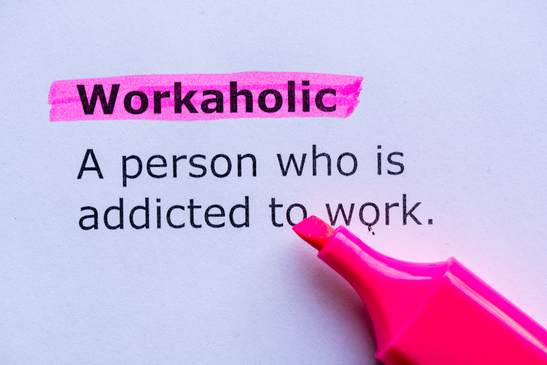 Your boss spends at least one day out of the weekend in the office. Or your boss is on the job till 7 pm most nights. Does this make you think, “I have to do the same if I’m going to succeed!” Maybe not everyone thinks that way, but I sure did! One of my bosses was in the office every Saturday. And nearly every evening, he was there when I left. I started to think that this was what was expected of me. But I had a family, and kids still at home, I wasn’t sure this was really what I wanted to do.
I decided to mention it to my boss. I wove it into the conversation when we were talking about someone junior to me. He mentioned that he didn’t think this particular employee was dedicated to his job. So I asked him to tell me what he meant when he said “dedicated to his job.” Did he expect overtime? Working on weekends? To my surprise, and relief, he told me that he didn’t expect long hours, and certainly not weekend job responsibilities. He did those things because his family lived in another city and it was easy for him to spend long hours at work. Instead, he wanted to see passion in his employees. He said,“people who work for this company should have a real desire for their work, and demonstrate value.”
So what is expected of most employees? How do you get ahead, without dedicating your life to your organization? Here are some tips from career coaches.
Be engaged. If you are engaged, you’re part of the solution. How can you help? Your attitude shows through and more people want to be around you.
Be a person who takes action. Have you ever been in a meeting where someone keeps telling you, “it won’t work.” It drives you crazy, doesn’t it? Instead of saying it won’t work, try coming up with a solution. You take ownership. Demonstrate the creative problem solving skills you have.
Work smarter. Long hours don’t necessarily mean you are more productive. Take a minute to think through your project and see if there are overlapping areas that aren’t necessary. That’s what business process re-engineering is all about. Companies and organizations start fresh. They look at a process and determine what activity is no longer productive. Working smarter means planning your time more effectively.
Focus on relationships. Advancement rarely happens in a silo. Instead, managers what to know that the relationships you’ve built are solid. It’s important that people who work for you think highly of you. And in building relationships, you never know what gems of knowledge you’re going to uncover.
Take on new challenges. Do you hide from new projects? Instead of thinking of the work that new projects entail, think about how, if done right, that new project might just help you learn new skills – skills that will be important to the business as you move forward.
Think Big. Instead of being mired in the details, think about how you can achieve more. If you’re going through a checklist, you’re probably thinking of tasks. Look at the big picture instead, and come up with ideas that might grow the business.
When it comes right down to it, the one thing that separates successful people from others is the smart decisions they’ve made – not the hours they’ve spent on the job.
More successful employees result in a more productive organization. Does your organization need help with career development? Leah M. Joppy & Associates provides training at all levels. Give us a call at 301-670-0051 and let’s discuss your needs.