Coaching For Any Level

Whether you’re starting out in your career or have spent years climbing the ladder, working with a coach provides an opportunity to achieve both short-term and long-term goals, as well as improvement in other areas. Wherever you stand in your job right now, chances are you’re wondering what the future holds in the next year or five years and beyond. Let’s start with a few questions that everyone should ask himself or herself, from entry level to executive:

  • How do you feel about your career? Do you like going to work?
  • Do you feel you’ve reached your full potential or do you feel like there’s something better for you out there?
  • Is your career in alignment with your values?
  • What areas do you feel could use improvement? Are there skill areas you’d like to learn and/or develop?

Maybe you feel like you’re too busy and just trying to deal with the day-to-day to really answer these questions. That’s where coaching can help. Here’s how:

Coaching for Entry Level Employees: You had such optimism and excitement starting out, but maybe that enthusiasm is starting to wane a bit. Your confidence might be a little tattered and you’re wondering if there’s potential in your career (or if you’ve even chosen the right field in the first place). Working with a coach provides guidance and accountability, as well as tools and strategies to help you build a fulfilling career that actually makes you excited to go to work!

Coaching for Middle Management: You’ve been working for a while and you’ve reached a management position. Now what? This is often the time where you can feel “stuck” and wondering if you’ve made the right career decision. You’ve invested a fair number of years in your present career, so would it make sense to make changes now? And what does the future hold? Is there potential for more and how can it be achieved? Coaching really delves into these areas and provides clarity and accountability for your future.

Coaching for Executives: Perhaps you’re thinking, “an executive has reached the pinnacle of his/her career. Why would coaching even be needed at this level?” Executives face a number of challenges that make coaching an effective and necessary component to unlock leadership potential. It not only maximizes an executive’s skill set, but it also develops a stronger team. Leadership is a skill that must be honed and working with a coach can help executives build a work environment that emphasizes employee trust and loyalty. And that’s just the beginning. There’s also building emotional intelligence, learning impactful communication and establishing a work/home balance, just to name a few.

Whether you’re just getting started or have been at it for years, working with a coach can benefit you at any level. Leah M. Joppy and Associates is ready to help you at any stage of your career. Call us at 301-670-0051 or email us at leah@lmja.com and let’s get started.

 

End Of Year Budget Needs – Popular Courses

If you’re examining your EOY budget and have last minute money that needs to be spent, now is an ideal time to invest those dollars in your team. Think about both the victories and challenges that you’ve experienced so far this year. Is there a conflict that might have been resolved better? Are there areas that need improvement, like enhanced communication or trust? This month and next, we’re focusing on our most popular courses that have changed the way offices operate, communicate and deal with issues. They’re a great investment in the most important part of your department – your people:

Here are two of our most sought-after courses that we’re focusing on this month:

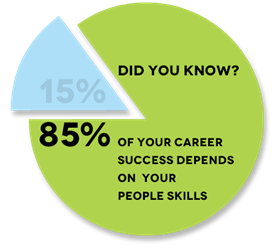
Effective Interpersonal Skills: Interpersonal skills are sometimes referred to as people skills, soft skills or emotional intelligence skills. In a nutshell, they’re the way you communicate and interact with others. Valuable interpersonal skills include: teamwork, leadership, empathy, active listening and so much more. In this course, we delve into verbal and non-verbal cues, why they matter and how to build strong interpersonal skills that will enhance the harmony and productivity of your office.

Conflict Management Skills: Problems can arise on any team. Whether you’re a manager or employee, you will likely need to resolve conflict at some point in your job. This might involve solving an issue between staff members, yourself and a colleague or with someone outside your department. Our course helps you develop conflict resolution skills, deal with constructive criticism and gain important counseling, mediating and problem-solving skills.

If you have money left in your EOY budget to spend and are ready to invest it in your most important asset (your team!), Leah M. Joppy and Associates is ready to help! Call us at 301-670-0051 or email us at leah@lmja.com.

Why Everyone Needs a Life Coach

The concept of life coaching is becoming more and more popular every year. You may even know someone who has worked with a life coach and find the idea intriguing. But what exactly does a life coach do and how can one help you with your own unique set of challenges? A life coach is someone who counsels clients on anything from career obstacles to personal struggles. A coach plays multiple roles in your life: he/she unlocks your potential, allows you to discover your best self, acts as a motivator and is an accountability partner.

If you’ve been doing some soul searching and feel like you could use a little help (or even if things are going great!), here are just a few reasons why working with a life coach could put you on the path to real and meaningful change:

  • You’re feeling “stuck”: Our lives are always in transition. At times, we may feel like nothing is working in our favor and we’re not moving forward. A life coach helps you realize what you truly want from life and helps you overlook all the noise in your head that’s keeping you from achieving your goals.
  • You’re feeling lost: Maybe you don’t know what you want. Perhaps you feel like you’re living your life on auto-pilot. A life coach will help you identify your personal values and how those values can translate into a more meaningful career, personal life, etc.
  • You’re feeling unhappy: You know you need a change. Or you know you need to change. Either way, a life coach can help you pinpoint why you’re unhappy and help you take steps to enact meaningful and long-lasting solutions.
  • You’re feeling happy: I know, I know. If you’re already happy, why do you need a life coach? Happiness can be a great motivator for change. If you love where you are in life, you’re more likely to be open to growth and wonder what else is out there to reach out and grab!
  • You’re feeling comfortable: Ah, there’s nothing like your routine and comfort zone! Any variation of the familiar and you break out in a sweat. A life coach partners with you to push you out of your routine and explore what else is out there.
  • You’re feeling scared: Who isn’t? You’re scared of failure, success, what people will think and say, etc. etc. A life coach will help you figure out your fears, provide you with tools to take action despite those fear and change the way you look and feel about them.

Life coaches aren’t a magic pill for all of life’s ups and downs. The solutions always reside inside of you. However, many times we’re so full of doubt and fear that we can’t hear or see the answers in front of us. Coaching helps you look at any situation from a different perspective to help you break through paralyzing thoughts.

Interested in learning more about life coaching and how working with one can bring positive and meaningful change to your life? Call Leah M. Joppy and Associates at 301-670-0051 or email us at leah@lmja.com and let’s get started. And check out our article on why people hire a coach.

Q&A For Your Life Coach

You’re ready to make some changes and you’ve decided that it’s time to work with a life coach. But now what? It can be tough to know what you should be looking for in a coach, especially if you’ve never worked with one. How do you make sure your coach will be the right fit for you and has the right background to address your unique needs? Here are a few questions to ask a potential coach to see if he/she is the best match:

Question 1: Why did you become a coach?

Question 2: What is your background and work experience?

Question 3: What is your coaching experience? How about training and certification?

Question 4: What is your coaching specialty? Are there areas in which you primarily work?

Question 5: What is your approach or philosophy about coaching?

Question 6: What methodologies and tools do you use?

Question 7: What are some of your coaching success stories?

After you’ve consulted with a potential coach, evaluate what the experience was like interacting with them. Were they easy to get a hold of? Did they follow up with you in a timely manner after you reached out? Did they answer your questions thoughtfully and thoroughly? Typically the way someone acts during your initial exchange is a good indication of the way they will act if you’re working together.  

A life coach is an important ally to help you achieve your goals, make big decisions and stay accountable for the things you want to achieve in life. If you’re ready to work with a life coach, Leah M. Joppy and Associates is ready to help! Call us at 301-670-0051 or email us at leah@lmja.com and let’s work together to make your goals a reality.

For reasons why someone would hire a coach, check out our article.

Why Is It So Hard to Keep Our Goals?

You start out motivated, enthusiastic, and with the best intentions. You’ve identified a goal (or two) and this time it’s going to be different. This time, you’re REALLY going to put in the work, see it through, and accomplish your goal once and for all. And then “things” start to get in the way, like time, finances, and life. All those good intentions are replaced with excuses and, before you know it, that goal you set out to achieve with such gusto seems impossible to accomplish.

No matter what goal you’re trying to reach – career, financial, health, or relationship – there are some common reasons why you’re throwing in the towel and accomplishing it. Several of them are listed below:

  1. Waiting to take action until you feel “ready.” If you’re waiting for the stars to be aligned and everything to be perfect, you may be waiting a long time.
  2. Putting your goals off until “someday.” So many of us “someday” ourselves right out of what we want to accomplish in life.
  3. Not making your goal a priority. Saying you want to make a change is one thing. Putting in the work to make it happen is quite another.
  4. Viewing mistakes as failure. People often think that a step backwards means it’s time to put on the breaks. But progress rarely comes in a straight line.
  5. Giving up before you see results. Results don’t always fall in line within the timeframe you imagined. Impatience can be big hurdle to change.
  6. Neglecting to anticipate the tough times and hurdles. Change isn’t easy and some days are harder than others. This can be a challenging lesson to learn.
  7. Falling victim to the “fear of success.” Yes, this is really a thing. Some people don’t always feel that they deserve or are worthy of success and can sabotage their progress.

When these fears and thoughts come up, a lot of people immediately see them as a stop sign and think it’s time to call it quits. But this time it can be different. By identifying the various roadblocks, you can view them as part of the process. You can face them, process them, and even welcome them. Best of all, you can overcome them and make 2019 the year you finally accomplish your goal(s). Leah M. Joppy and Associates can help. Call us at 301-670-0051 or email us at leah@lmja.com to discuss your needs.

Overcoming Obstacles To Your Goals

Thomas Edison said, “Many of life’s failures are people who did not realize how close they were to success when they gave up.” As we discussed in the previous article, there are so many reasons why people abandon their goals. What can we do to overcome some of these obstacles and start moving towards accomplishing our goals? Here are a few ideas:

Acknowledge Fear: There’s an acronym for FEAR: False Evidence Appearing Real. We’ve all experienced fear, but the key is to acknowledge where you fears lie and what fears are true and what aren’t based in reality. Ask yourself, “what’s the worst that could happen?” And then, “what’s the best that could happen?” Almost always, the good outweighs the bad.

Quiet those Nagging Thoughts: You know the ones: “I don’t have time to work towards my goals.” “I’m already maxed out!” “I’m not good enough to achieve [insert goal here].” Bring them to the surface and acknowledge them. They’ve been there all along and they’re holding you back. By becoming conscious of those nagging voices in your head, you can face each thought and develop a plan to move past them.

Just start: Maybe it’s 5 minutes a day and you set a timer. Put aside the “someday I’ll do it” and “when I’m ready” and just accomplish one task. However small it may seem, the act of doing SOMETHING can build confidence and start to put a goal-achieving plan into action.

There are so many things that can stop us from making our goals a reality. But with the right tools and mindset in place, we can calm the voices in our head saying we can’t do it and move towards meaningful change. Leah M. Joppy and Associates is ready to help! Call us at 301-670-0051 or email us at leah@lmja.com and let’s work together to make your goals a reality.

Starting Points for Achieving Long-Term Goals

All too often, we buy into the idea that we have no control over our lives. The circumstances of life make it too impossible to plan for the next month, let alone three or five years into the future. It’s challenging to own up to the fact that we make choices all the time that determine our future and do have responsibility over our lives. Once we realize we can determine the outcomes of our life and external circumstances don’t always control us, we can begin mapping out long-term goals. It’s not just about 2019, it’s looking into 2020 and beyond.

As we mentioned in the previous article, achieving long-term goals requires commitment and not just interest. You need to be all in or else the excuses, circumstances, and challenges of life start to derail the process. But how do you get started? Here are a few tips to get you thinking about your long-term goals and how you want to achieve them:

  • Write goals down to crystallize them and give them force.
  • State each goal as a positive statement.
  • Be precise by adding dates, times, amounts, etc. to increase your level of accountability.
  • Set priorities to avoid feeling overwhelmed.
  • Invest in a coach. An objective and non-judgmental sounding-board can be very helpful.

Maybe some of those ideas gave you food for thought. It’s just the beginning of what you can do to set attainable long-term goals, both personally and for your team. Please call Leah M. Joppy and Associates at 301-670-0051 or email us at leah@lmja.com and let’s work together to plan your long-term goals and make them a reality!

It’s Not Just About 2019: The Importance of Long-Term Goals

A new year is upon us and that means you’ve probably heard this question dozens of times: “What is your New Year’s resolution?” Whether it’s losing weight, organizing our homes, or finding a new job, our society is in love with making resolutions at the start of every New Year. But we’re not so in love with keeping them. Only an estimated 8% of people keep their New Year’s resolutions and those are only short-term goals! Ask someone the dreaded question, “where do you see yourself in five years?” and you’ll likely be met with a little bit of fear and anxiety. Why are long-term goals daunting to so many? Are we doing ourselves a disservice in life by merely thinking short-term and not planning for years in the future? The short answer is “yes.”

What if you positioned this year differently and lived your life based on what you intend to do 3 or 5 years from now? Although you don’t have a crystal ball and can’t plan for what will happen in the future, you can position yourself to achieve the goals you have for your life. One key is how to view your goals: they’re a means and not an end. Ask yourself the question, “Am I merely interested in achieving these goals or am I truly committed?” Commitment means there are no excuses and you’re willing to do whatever it takes. Interest simply means there will be excuses and circumstances along the way telling you why you can’t do something.

True commitment means you’re willing to put aside the idea that you’re not in control of what happens in your own life. You’re ready to live a consciously designed life based on the following principles:

  • YOU are in control of what happens to you; you are capable of positioning yourself and making a plan.
  • YOU have the ability to make things happen and won’t let external circumstances derail your goals.
  • YOU are responsible for the choices you make.
  • YOU are willing to stay motivated and value your goals, even when life is difficult.

The idea behind long-term goal planning is: Don’t just plant a tree, plant an orchard. And don’t view 2019 as just one year, but think of how you can begin writing your story for 2020, 2021, and even farther. We have some powerful activities that will help you and your team think beyond the typical New Year’s resolutions and begin creating meaningful and attainable long-term goals. Call Leah M. Joppy and Associates at 301-670-0051 or email us at leah@lmja.com.

The Importance of a Cultural Assessment For Your Company

For today’s businesses, building a successful corporate culture has become a significant way to maintain a competitive advantage and differentiate a brand. Your culture can be a unique means to attract talent and also motivate, engage, and retain employees. For the last few months, we’ve taken a look at cultural values, both in society and the workplace. We’ve discussed what values are and why they’re so important. So, now you may be looking at your organization and thinking, “how do I define the culture in my particular office? And how do I take this culture and incorporate it into the day-to-day?” Conducting a cultural assessment is often what you need. It’s the first step in answering the question, “Is what we say we are, truly what we are?”

Conducting a cultural assessment includes reviewing the various components of culture, including environment, traditions, social relations, incentives, and values. Some of the following questions are examined: “Are employees happy in the space they’re in? Are workers communicative and social, both in person and online? Are the core values of the company filtering their way down to the employees in a clear manner? Are rewards offered through an employee reward system?” That’s just a sample of some of the areas that are explored. Through gaining this understanding, you can determine where gaps exist between the current state and the desired culture.

Often, organizations want or need to make changes, whether it’s shaping new behaviors, promoting new ways of thinking, or developing a culture of education to develop employees. However, the key to changing a company’s culture is a commitment from the leadership team. Leaders must understand why change is necessary and have a clear vision for making those changes. They must also be willing to change their own behaviors and actions!

I use the Barrett Values Center assessment tool to conduct cultural assessments for my clients. I find it to be the most comprehensive tool for understanding the current state of an organization’s culture and determining where changes are necessary. To learn more about the Barrett Values Center, visit their website as www.valuescentre.com. To schedule a time to discuss conducting a cultural assessment for your firm, call Leah M. Joppy and Associates at 301-670-0051 or email us at leah@lmja.com. Meaningful and sustainable change is possible.

Six Warning Signs Your Company May Need A Culture Overhaul

It’s no secret that many of the best performing companies have vibrant and exciting cultures. Disney, Apple, and NIKE, we’re looking at you! On the flipside, a toxic company culture can cause an organization to struggle. Maybe you’re dealing with poor employee morale and high turnover and are wondering if your company’s culture is to blame. What are the warning signs that your company culture may be in trouble? Here are a few signs that it may be time for a cultural assessment:

  • You routinely fall short of meeting goals and “underperformance” is a word tossed around all too often
  • Employees aren’t demonstrating a strong commitment to the company and energy is can only be described as “low”
  • Workers complain about a lack of positive feedback (or feedback at all)
  • There’s a level of mistrust among employees and leaders
  • Employees feel there is a lack of opportunity within the organization
  • The level of job burnout is high and work/life balance seems to be nonexistent

Don’t wait until issues blow up into big problems. A cultural assessment is a vital step towards assessing the current culture of your organization and taking clear steps towards making purposeful and meaningful change. Outside perspective is invaluable in healing a poor company culture and the damage it can inflict. To discuss conducting a cultural value assessment for your business, please call Leah M. Joppy and Associates at 301-670-0051 or email us at leah@lmja.com.