What Does Career Growth Mean to You?

3d Illustration: Business ideas. Group puzzles in a circle, care Career growth is personal. If you have a clear definition of what career growth means in your own mind, you will be able to take advantage of growth opportunities. More than likely, there are opportunities both within your present organization as well as opportunities that are provided by outside resources. Both are valuable.

Define career growth for yourself. That could mean the ability to learn new skills and use them in your job. Career growth for some might be to work for an industry leader. For others, growth is the opportunity to take on new challenges and responsibilities. What is your idea of career growth? Remember that your career growth, while mostly a map of your career goals, can also include some personal goals. Once you’ve defined your career growth plan, write it down and start working toward your end result.

LMJA Can Help

LMJA can help with Individual Development Plans (IDP). An IDP is critical to your future. It is fast becoming mandatory in Federal Government for all employees – whether senior level or entry level. All employees are being highly encouraged to take responsibility for their own career growth.  Give us a call at (301) 670-0051 and let us discuss our step-by-step action plan to achievement.

Happier Work Life

HappyGoing into the New Year we hear a lot of talk about getting in shape, eating healthily and making sure we exercise daily. Certainly that’s all well and good – especially after our indulgences of the holiday season. But maybe even more important is our mental well-being.

We are often defined by our work. Our work gives us structure and purpose. But what happens when you are sick of your job? Should you quit? While there comes a time when a job change is what we need, very often the fact that we are unhappy at work is the result of our own neglect. Perhaps it’s the routine of going to work every day. Or maybe it has to do with your long standing devotion to the work you do. It’s hard sometimes to shake the feeling of inadequate fulfillment at work.

What can we do? While there are all kinds of ways that you can make your job more interesting, or your attitude more positive (see our Tips for Being Happier at Work), our quest this month is to make that happier attitude a constant in your life.

Two things that are discussed frequently when it comes to work life satisfaction, include:

  • Focusing on learning opportunities, and
  • Reaching an intense state of focus.

According to a recent article by Fast Company, to achieve real happiness at work, we should focus on what we are learning in our job and building on that set of skills. There are a lot of ways we can go about building our knowledge base.

Research. Fortunately, we live in the internet era. You can find information online about any subject. Stick to known and reputable sites and you’ll likely find lots of information on the skill you are trying to build. And don’t forget to check out podcasts and videos. It’s amazing how much and how fast we can learn about a particular skill by listening to someone, rather than reading and re-reading articles and white papers.

Colleagues. Chances are, there’s someone in your business or association that has the skills you are interested in. Seek out mentors, colleagues and friends. Ask them to give you feedback and point you in the right direction. Having a few conversations can really help you hone in on the areas of development – and in the process, all that talk makes you more excited to learn.

Resources. There are lots of outside resources where you can take a seminar or workshop on a particular subject. These resources aggregate a lot on information, helping you make greater strides in a shorter amount of time.

The second tip for creating a happier work environment comes from a study done by the University of Chicago. The study examined peak performance and found that when individuals were able to reach an intense state of focus (often called “flow”) that they became completely engrossed in a project and free of external distractions.

The benefits of focus. This intense state of focus leads to a kind of euphoria – a mastery of the subject, if you will. The result is happiness, productivity and a new sense of learning. So how do we reach this intense state of focus?

Organization. The key to focus seems to be organizing your tasks and priorities with clear goals in mind that are reachable. As you meet and exceed these goals, focus increases, along with our confidence level. And as our confidence increases, so does our enjoyment of our work. We’ll even put more stress on ourselves to learn more, so desirable is this state.

Continuous enjoyment. There is evidence that we can continue this state of euphoria and focus by setting clear goals every day. Writing down our tasks, setting priorities and accomplishing these tasks are important to our enjoyment and focus.

If you or your organization needs help in the New Year with Individual Development Plans, give us a call. An IDP is critical and fast becoming mandatory in Federal Government for all employees. An IDP is a road map of mostly career goals (some personal goals)  and contains a step-by step-action plan to achievement.  Give LMJA a call at 301-670-0051, or email me at Leadership@lmja.com. Let’s put some time aside to discuss your needs.

Tip: 5 Tips for Being Happier at Work

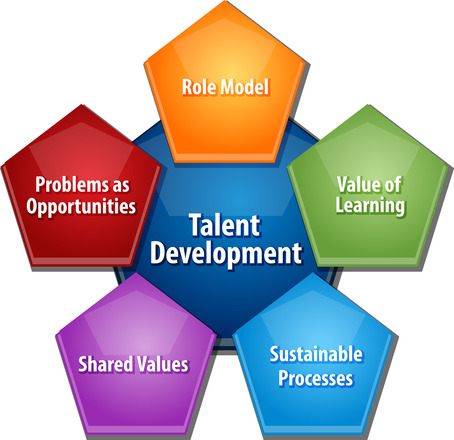
Talent development business diagram illustrationNo matter how challenging and invigorating your work, we can all use a few ideas to clear our heads or get us thinking more positively. Try these on for size.

  1. Read daily affirmations. At the end of a weekly networking meeting, someone always has a positive quote for us. It works. We realize our capabilities and self-worth and it helps us stay motivated.
  2. Talk it out. I think this one works especially well for women – but don’t let that be your excuse to pass on this tip. Having a quick conversation with a friend, or setting the time aside to get a cup of coffee with a friend helps us work out difficulties.
  3. Conquering the big project. Sometimes just thinking about what’s on your plate can be overwhelming. The trick is to slice it up into several servings. Take the time to go over the project, decide what is needed, and break it up into smaller tasks.
  4. Go on silent. This is one of my favorite tips. Sometimes I just want to work my way through projects without interruption. Closing my door, putting my phone on silent, NOT opening my email – all of these tactics taken together give me a sense of power and ownership. I come away fulfilled.
  5. Don’t go it alone. Reach out to colleagues or friends. Talking over a project with someone else is sometimes all you need to make it clear in your own mind. And chances are, the person you talk to will even give you other ideas to consider.

Do you have a tip that works for you? Send us your tip by email and we’ll share in an upcoming blog post.

LMJA works with organizations, helping them focus on various challenges. If you need help with training or would like information on developing Individual Development Plans (IDP) for all levels of employees, give us a call at 301-670-0051, or email me at Leadership@lmja.com.

Leading with Confidence

Believe In Yourself Shows Faith Belief And OwnThink back to your best teachers, or the bosses who have taught you the most. Chances are these people were confident, self-assured leaders. Self-confidence is often admired by others. It fact, being confident in oneself actually inspires confidence in others. Did you ever notice how confident people actually carry themselves differently? They are often poised, relaxed and they walk tall. Confident people see their lives in a positive light.

On the other hand, when you meet people with little or no confidence, you often observe that there is a certain fear of the unknown for these people. Lack of confidence often translates to a more internal outlook on life and low self-esteem. It’s harder to take risks but easier to stay in their own comfort zone.

People who are more confident seem to live a fuller life. So we asked, are people born one way or another? Or do we learn to be confident?

Confidence seems to have a certain transient quality. Our ability to be more confident increases and decreases based on the circumstances. If you are a runner, or active in some other way, you probably experience this ebb and flow often. After finishing a race that you’ve trained for, you may feel like you could conquer the world!

By experiencing both low and high points of confidence, we know that we can all LEARN to be confident. We learn through practice, training, knowledge, talking to others and by thinking positively. As we learn, our confidence translates to feelings of well-being. We have a greater acceptance of our body and mind. And most importantly, we believe in our own abilities.

As confident leaders, we will be more successful and self-assured. It’s to your advantage to build confidence in the people who work for you and around you. Jack Welch once said, “Giving people self-confidence is by far the most important thing that I can do. Because then they will act.”

As your team gains confidence, there’s a certain vibe of mutual respect that fills the air. And confident people are more willing to go out on a limb – to push for even greater achievements. These are the people you want working for you!

Imagine for a minute that you can separate your team into highly confident people and people with low confidence. Here’s what you may find.

High Confidence vs Low Confidence

Your team believes in what they are doing, even when others don’t. Your team does what others expect them to do.
A confident team will take risks and even go the extra mile to achieve goals. A less confident team will stay within their comfort zone. In all likelihood, they will not stretch their capabilities
Confidence is not about NOT making mistakes. We’re human. But a confident team will own up to and learn from their mistakes. A team without confidence, on the other hand, will try to cover up their mistakes – which ends up helping no one and hurting the organization.
A confident team accepts congratulations gracefully. Those less confident will downplay complements offhandedly.
A confident team will congratulate and reward the good work of others. A less confident group will often call attention to their own accomplishments.


As a leader, it’s important to build self-confidence in your team. We are all persuaded by someone who speaks clearly and confidently. It’s important to stay away from the negative, and instead focus on finding the right solution to a problem.

Training, mentoring and brainstorming play important roles in building confidence within your team. Setting small goals and providing the tools your team needs to succeed will help them achieve goals and build on positive experiences.

Push yourself and challenge others. If you need help with training or mentoring, give LMJA Associates a call at 301-670-0051. We offer personal and professional training for every stage of career development.

Tip: How to Build Self-Confidence

Businessman holding wooden cubes in the palm of his hand with thThere are many things you can do to build self-confidence. Here are some of the most effective ones. Keep in contact with us this month on Facebook, LinkedIn and Twitter as we provide more information on building a confident team.

  • Start by making a positive list. Write down your strengths, achievements and things you admire about yourself. For some, talking to a friend or colleague will help you to create a better list.
  • Take care of yourself. Eating right, exercising and making time for ourselves – these are all activities that make us feel positive.
  • Look to others for inspiration. Get involved with something – a group, a sport, a charitable organization.
  • Avoid downers. Have you ever been around people who are not happy unless they’re complaining? Whatever it is that makes you feel down also makes you feel bad about yourself.
  • Keep in mind that perfection is impossible. It actually keeps us from taking action. Instead, focus on progress.
  • Take risks. Do something you haven’t tried before. You never know what will happen until you try, and then you learn.
  • Finally, stop dwelling on it! We all do this. We’ve had a bad day and on the ride home that’s all we can think about. In fact, we think about it so much that it becomes all consuming. Learn to drop it. You can’t change what happened, so go forward.

If you need help with individual or team coaching or developing a peer-to-peer or executive coaching program, give us a call at 301-670-0051.

Effective Leading Starts with Listening!

photodune-9447856-discussion-xsRemember when sales people used to push themselves on you? You’d go into a store and someone jumps right on top of you and starts telling you about the merchandise. It kind of makes you go wonky, doesn’t it? It’s very disconcerting and not very friendly. The first time I bought my own car it nearly rattled me. The sales person was mostly interested in getting a car off his lot than listening to me.

Thankfully, the better sales people have refined their trade. Instead of hanging all over you, they wait. They ask open ended questions. And they Listen.

The same holds true for leaders. Leaders who are interested in getting the work done understand that the key to success is enhancing the capacity and skills of those they work with. Leaders, in fact, coach. And in order to coach an employee to reach his/her highest potential, nothing is more important than how leaders listen, absorb what is said and give feedback.

Listening is a skill. It takes thought. We have to remind ourselves often to stop talking and just listen. Here are five rules to follow which will help develop the skill of listening effectively.

Listen with Interest. We’ve all had that occasion when we’re talking and yet clearly seeing that the person we’re talking to is not really listening to us. Instead, listen with the curiosity of someone who really is interested in what your employee is saying. Instead of thinking about what our feedback is going to be, stay focused on the topic. Keep interruptions to a minimum and move the conversation forward by keeping it on target.

Absorb what you hear. We can fake it sometimes. We can look like we’re interested but our minds are going elsewhere. Instead, take in what is being said. Register the emotion of the person who is talking to you. And be prepared to restate to the employee the discussion you’ve just had. If you do, you’ll stay in the conversation and not drift.

Restate the conversation accurately. Now, you’re showing the person that you really are listening. You not only demonstrate your commitment, but the person you’re talking to gets to “hear” how they sound. Is the message that was conveyed the message he/she really meant to convey?

Ask Questions. Asking questions promotes a fruitful dialogue. You’ve extended the conversation. And by asking open-ended questions, the person you are talking to might voice the answer you want to hear. In fact, you are empowering your employee to think it through. And you’re building their confidence.

Provide Feedback. Avoid preaching and bringing up past experiences. Instead, get clever. You want to be clear in your feedback, but you can also make it relevant and non-threatening. Make your feedback helpful and positive.

Are you a C1, C2, C3 or C4 communicator? LMJA can help your team self-identify their style and strengthen communication… and have fun! LMJA also help organizations with many common challenges – time management, project management, conflict management, strategic planning, to name a few. If you need help or would like to discuss your options, give us a call at 301-670-0051, or email me at Leadership@lmja.com.

Tips for Active Listening

Conversation Between 3d Characters Showing Communication And DiscussionWe all have times when we’re distracted. Or our emotions get in the way. Instead of listening, we find ourselves preparing a rebuttal. Here are some good tips for active listening. Try them and let us know how they work for you!

  1. Know your own communication style. If you are well aware of your style of communication, you’ll know what you need to do to create a lasting impression with other.
  2. Concentration. If you find it very difficult to concentrate on what is being said, try repeating their words mentally as they say them. This will help reinforce their message and keep you focused.
  3. Disturbance. If there is a “side” conversation going on in the office, move. Try a quieter room or find a spot in another part of the room.
  4. Repetition. Use reflective words so that your interpretation of the conversation is correct. For example, use words such as: “What I’m hearing is. . .” and “Sounds like you are saying. . .”
  5. Emotional Distraction. If you find yourself reacting emotionally to what someone said, admit it. Ask for more information or for better clarity.
  6. Interruption. Finally, allow the person speaking to you to finish each question before you answer. Don’t interrupt.

LMJA works with organizational challenges. If you need help or would like to discuss your options, give us a call at 301-670-0051, or email me at Leadership@lmja.com.

Where will you be, this time next year?

Game strategy drawn with white chalk on a blackboard.It’s the beginning of a fiscal year. A year from now you’d like to look back on the last 12 months and be proud of what you’ve accomplished. Is that even possible in our changing environment? Can I create a plan that not only motivates me, but motivates all the people who work for me?

I know what you’re thinking. . .

“Maybe if I owned my own business, I could make plans!”

“If I work with blinders on, maybe I can just keep pluggin’ away and not pay attention to all the changes happening around me.”

It’s not easy. In this changing world, is there any point in trying to plan? The answer is a resounding YES! But the planning has to be smart. Consider these points.

Set Priorities. As of today, what are the priorities of your organization? The basic priorities probably won’t change much over the year, so think high level priorities and write them down.

Focus Energy. In every job, there are lots of things we do that sap us of energy, but really don’t move the organization forward. So what we are talking about here, is focusing on the items that have more to do with the overall health of the organization, rather than your particular job.

Identify Resources and Strength Operations. Identify the high level priorities and decide where your energies should be spent. Look around your organization and beyond for resources that can help. Are there groups or departments who can help you strengthen your talents and accomplish a goal? Is there an individual with particular skills who can help develop those same skills throughout your department? Should you go outside your organization? Sometimes training is best accomplished by someone from the outside. A third-party resource may not have preconceived notions on what you should learn. Instead, outside resources are generally better at listening to you and coming up with the training customized to your needs.

Establish Common Goals. We all have different work to do, but our goals can be universal. Knowing what my part is in reaching a goal helps me keep on track. And measuring the activity leading up to the goal can remind me each month of the importance of the goal.

Assess and Adjust. When the organization takes a turn, you can adjust your priorities, energy, resources and goals. Chances are, you’ll only need to adjust them slightly, making everyone feel better about the change in the organization.

Measure Accomplishments. As each quarter winds down, focus on what you have been successful in achieving. On a daily basis, we sometimes feel like we’re going in circles. But when we look at a 3 month period, it’s fulfilling to see how far we’ve come.

Strategic planning depends on a disciplined effort that produces fundamental decisions and actions that shape and guide what an organization is, who it serves, what it does, and why it does it – with a focus on the future. Measuring action items is critical. See our tip on measuring strategic plans.

For more information on how Leah M. Joppy & Associates can be your resource for training, give us a call at (301) 670-0051. Or take a look at the training opportunities on our website.

5 Tips for Measuring Strategic Success

Priority

  1. Include Key Performance Indicators. Nearly everything we do can be translated to numbers. While numbers never tell the entire story, they serve two purposes: 1) they help management determine results, 2) they motivate everyone to reach the goal.
  2. Include the HOW in your plan. How does your goal help align the organization? Including your organization and how your objectives improve the performance of the entire organization helps everyone understand the vision. Communication is key toward helping an organization achieve success.
  3. Set timeframes. Working on your strategic plan for 12 months is more effective than squeezing it all in during the last quarter of the year! If timetables are given for each goal, small chunks that can be accomplished on the way to the accomplished goal, the chances of reaching that goal are improved considerably.
  4. Make it possible. If a goal is not attainable, there will be no movement toward that goal. Breaking it down, even if the goal will end up taking several years, will improve the chances of success. Along the way, your organization will see progress, allowing your group to envision the end result.

For more information on strategic planning and overcoming organization challenges, check out our website at http://www.lmja.com/index.php, or give us a call at 301-670-0051.

Competency Modeling

Sept imageIs competency modeling part of your strategic plan? More and more organizations are using competency modeling to define successful performance in a particular work setting. Here’s an overview of competency modeling – what it means and what are the benefits of competency modeling.

Competencies are individual characteristics. Competencies are often the basis for skill standards. They include the knowledge, skills, abilities, self-image, traits, mindsets, feelings, and even the ways of thinking with regard to appropriate roles. These competencies lead to a desired result – they contribute to exemplary performance that in turn, creates an impact on the outcome of the organization.

In short, a competency is the framework for defining the skill and knowledge requirements of a job.

What is a competency model? A competency model is a list of characteristics that together define successful performance in a particular work setting.

Competency models can be developed for specific jobs. They are widely used in various industries to define and assess competencies – in both hard and soft skills.

How does competency modeling differ from job analysis? The aim of competency modeling is not to summarize how a job has been performed in the past, but rather to identify the behaviors that will be needed to achieve long-term strategic goals. In this sense, competency modeling is forward looking and not rooted in the past.

What are the benefits of competency modeling. Competency models are considered valuable by various organizations to define skill and knowledge requirements of specific jobs, to assess competencies and performances, and help set business strategy. They also help reveal strengths and weaknesses – which help form the basis for training programs and learning content, both formal and informal.

In general, organization that adhere to competency modeling report:

  • Greater alignment with business objectives.
  • Enhanced productivity.
  • Increased workforce nimbleness.
  • Improved ability to identify and develop high achievers.
  • Better retention of top talent.   |

Experts also recommend that competency models receive sponsorship from senior leaders, are aligned to the organization’s business strategy and culture, are based on research and are tied to talent management practices.

For more information on Competency Modeling and Training, contact LMJ&A at leah@lmja.com. We can help your organization successfully employ competency modeling in the workplace. Working with you step-by-step, we will support and guide your organization through each component of the process. Give us a call at 301-670-0051.