COACHING FOR PERSONAL ACCOMPLISHMENT
 When we think about our life accomplishments, we often reflect on what we’ve achieved career-wise. We received the promotion and big raise, moved to the corner office or changed companies to move forward in our careers. But what about our personal accomplishments? What do we want to achieve outside of the office in terms of personal goals that bring us joy and fulfillment? With the busy day-to-day of our work schedules, these goals and accomplishments sometimes fall to the back burner. It’s important to carve out time to think about what we want out of life and put goals in place to make them possible.
Perhaps you’ve heard of the SMART mnemonic. It’s a useful way of making goals more powerful and attainable. SMART typically stands for:
- S – Specific (or Significant)
- M – Measurable (or Meaningful)
- A – Attainable (or Action-Oriented)
- R – Relevant (or Rewarding)
- T – Time-bound (or Trackable)
For example, instead of having “Travel the world” as a personal goal, it’s more powerful to use the SMART goal of “To complete my world travels by December 31, 2028.” You can then start to break down your goal and begin preparation. Here are a few broad guidelines to help you set effective, achievable personal goals – whether you want to travel the world, take up a new hobby, run a marathon or whatever your heart’s desire:
Write it all down: Putting goals on paper give them more credibility and force. Don’t forget to state each goal as a positive statement!
Be precise: Entering dates, times, amounts, etc. can help you measure achievement and gives you a stronger sense of accomplishment.
Set priorities: If you have several goals, give each a priority to avoid feeling overwhelmed. It also keeps you focused on your most important goals.
Be realistic: Don’t fall into the trap of setting goals that are unrealistic and possibly unattainable. There’s nothing wrong with a challenge, but too many obstacles can lead to frustration and throwing in the towel.
You wouldn’t set out on a major journey without any idea of your destination. Why should your life be any different? Leah M Joppy and Associates has helped many people accomplish their life goals outside of the office and we can do the same for you! Call us at 301-670-0051 or email leah@lmja.com to discuss what you want to achieve.
Here are other reasons why people work with a coach.
LEADERSHIP COACHING
 Football legend Vince Lombardi said that, “leaders are made, not born.” When it comes to effective leadership, we can all use a strategy that helps us hone our skills and bring out the best in our team. But figuring out how to do that can be a challenge and can feel overwhelming when you already have a lot of other responsibilities on your plate. We often get so caught up in thinking that our current leadership methods are working “well enough,” so why rock the boat? Leadership coaching is an ideal way to break out of a leadership rut and get a fresh perspective.
What does leadership coaching entail? It’s a chance to step back from your everyday method of leadership, examine what’s working and address what’s not. Initially, we take a look at your leadership style and behaviors, along with those in your organization. We then meet to discuss issues and plans. Support and guidance is offered to address any concerns. A multi-step plan of action is developed, and helpful tools and resources are provided (i.e. – reading materials, technology tools, outside learning opportunities). And don’t forget accountability and feedback. We meet regularly to determine how things are going, where you are with your goals and how your skills are developing.
What are the benefits? First of all, you’ll become a more effective leader through greater self-awareness of your decisions, how to best use the strengths of your team and effective delegation of tasks. But it goes far beyond that. You’ll also gain confidence, discover strengths and talents you may not have known existed and gain a new perspective. Your organization will benefit through your enhanced skills and you’ll uncover new methods of tackling challenges while bringing out the best in your team.
Have you been struggling with the challenges of leadership? Or do you feel like your “tried and true” methods could use a little, well, tweaking? Then, let’s talk! Leah M Joppy and Associates has a wealth of experience helping leaders with all different levels of experience, from those new to the role to others who have been at it for years. Call us at 301-670-0051 or email leah@lmja.com to discuss your unique needs.
Check out our article on why people choose to work with a coach.
IMPLICIT BIAS (Part 1)
 You may have heard the term “implicit bias” used to describe different situations, but may not really know what it means. Implicit bias, also known as unconscious bias, refers to judging people based on our unconscious thoughts, beliefs or feelings. It often happens without us realizing it when our brains make quick assessments and judgments of people and situations.
Whether we want to admit it or not, everyone has biases. However, it’s important to remember that bias stereotypes do not often come from a place of bad intent. Rather, implicit biases are the product of learned associations and social conditioning. They start at a young age and are formed in our brains through years of various influences. Think about the following questions and how your implicit or unconscious bias may come into play:
- Picture a nurse at your local hospital. What’s the image that pops into your head?
- Picture a firefighter at your local firehouse. Again, what image comes to mind?
- You’ve just been cut off in traffic and are astonished that someone can drive that badly! What image enters your head when you think about the driver?
- A new stay-at-home parent wants to join your playgroup. Before the parent arrives, what image comes to mind?
- You’re boarding a plane and peek into the cockpit. The pilot, co-pilot and flight engineer are all women. What are your first thoughts?
These can be tough questions to answer honestly. We’d like to think that we’re past all the typical stereotypes that exist in our society. We can feel embarrassed or ashamed that we’re surprised if a stay-at-home parent is a father or a firefighter is a woman. Again, implicit biases don’t exist because we’re bad people, but are so deeply ingrained in our brains that we have to fight the automatic urge to jump to conclusions
Our biases affect us and our decision-making processes in so many different ways, including our perceptions, attitudes and behaviors. Next month, we’ll discuss how implicit bias can affect life in the workplace. Leah M Joppy and Associates regularly conducts seminars to address and combat unconscious bias. For more information and to discuss the unique needs of your organization, contact us at 301-670-0051 or email leah@lmja.com.
Coaching For High Level Administrative Staff
 If you’re in a high-level administrative position, you’re used to wearing a lot of hats. From handling a wide variety of day-to-day duties to dealing with all types of personalities, it’s a job that requires a lot of knowledge and flexibility. Plus, you’re expected to do it all with a smile on your face and a “can do” attitude. High-level administrative positions can be extremely demanding and can sometimes lead to high stress levels and burnout. Here are some of the common challenges people in these positions face:
Challenge 1: Maintaining a work/life balance
Challenge 2: Dealing with difficult people
Challenge 3: Ensuring proper communication strategies are in place and making sure they’re followed
Challenge 4: Feeling disrespected and blamed for anything that goes wrong
Challenge 5: Feeling like you need to be available 24/7
If you’re an executive assistant, maybe some of these challenges sound familiar to you. And maybe you’re ready to make some changes that will help you both in your job and outside the office. That’s where a life coach can work with you and provide valuable perspective. By assessing the unique challenges you face in your position, a life coach can help you develop a detailed action plan with clear and specific expectations. Some of the outcomes from working with a life coach include:
- Building a stronger partnership with your manager(s)
- Establishing stronger boundaries
- Improving communication and streamlining processes
- Increasing productivity and feeling more focused dealing with day-to-day tasks
- Reducing stress and enjoying your job (and life!) more
If you’re starting to feel the burnout that often accompanies high-level administrative positions and want to make some meaningful life changes, Leah M. Joppy and Associates is ready to help. Call us at 301-670-0051 or email us at leah@lmja.com.
Need more reasons for choosing to work with a coach? Learn more.
End Of Year Budget Needs – Popular Courses (Part 2)
 If your EOY budget still contains money that needs to be spent, you may be thinking about what to do with those extra dollars. Investing them in your team is something that will pay off for years to come! Last month, we focused on two of our most popular courses that have helped departments deal with conflict and develop effective interpersonal skills. Here’s a look at two more of our most sought-after courses that we’re focusing on this month:
Developing Inclusive Teams: According to studies on the subject, leaders who create an inclusive culture for their team see performance increase by 17 percent, as well as increases in collaboration and decision-making quality. While most managers believe having a diverse and inclusive work culture is critical to performance, they don’t always know how to achieve that goal. Our course covers a broad range of topics, such as examining the culture of an organization, identifying current and potential problems and providing tangible tools for meaningful change. Each organization faces it’s own unique challenges when it comes to inclusivity and we work with you to build a customized course that will yield real results.
Organizational Strategic Planning: Organizational strategic planning is an incredibly important activity that covers a lot of bases. It involves setting priorities, determining where to focus energy and resources, ensuring that employees are working towards common goals and so much more. Our course helps you develop an effective strategic plan that clearly lays out where your organization is going, the actions needed to make progress and a blueprint for success.
If you have money left in your EOY budget to spend and are ready to invest it in your most important asset (your team!), Leah M. Joppy and Associates is ready to help! Call us at 301-670-0051 or email us at leah@lmja.com.
Why Is It So Hard to Keep Our Goals?
 You start out motivated, enthusiastic, and with the best intentions. You’ve identified a goal (or two) and this time it’s going to be different. This time, you’re REALLY going to put in the work, see it through, and accomplish your goal once and for all. And then “things” start to get in the way, like time, finances, and life. All those good intentions are replaced with excuses and, before you know it, that goal you set out to achieve with such gusto seems impossible to accomplish.
No matter what goal you’re trying to reach – career, financial, health, or relationship – there are some common reasons why you’re throwing in the towel and accomplishing it. Several of them are listed below:
- Waiting to take action until you feel “ready.” If you’re waiting for the stars to be aligned and everything to be perfect, you may be waiting a long time.
- Putting your goals off until “someday.” So many of us “someday” ourselves right out of what we want to accomplish in life.
- Not making your goal a priority. Saying you want to make a change is one thing. Putting in the work to make it happen is quite another.
- Viewing mistakes as failure. People often think that a step backwards means it’s time to put on the breaks. But progress rarely comes in a straight line.
- Giving up before you see results. Results don’t always fall in line within the timeframe you imagined. Impatience can be big hurdle to change.
- Neglecting to anticipate the tough times and hurdles. Change isn’t easy and some days are harder than others. This can be a challenging lesson to learn.
- Falling victim to the “fear of success.” Yes, this is really a thing. Some people don’t always feel that they deserve or are worthy of success and can sabotage their progress.
When these fears and thoughts come up, a lot of people immediately see them as a stop sign and think it’s time to call it quits. But this time it can be different. By identifying the various roadblocks, you can view them as part of the process. You can face them, process them, and even welcome them. Best of all, you can overcome them and make 2019 the year you finally accomplish your goal(s). Leah M. Joppy and Associates can help. Call us at 301-670-0051 or email us at leah@lmja.com to discuss your needs.
The Importance of a Cultural Assessment For Your Company
 For today’s businesses, building a successful corporate culture has become a significant way to maintain a competitive advantage and differentiate a brand. Your culture can be a unique means to attract talent and also motivate, engage, and retain employees. For the last few months, we’ve taken a look at cultural values, both in society and the workplace. We’ve discussed what values are and why they’re so important. So, now you may be looking at your organization and thinking, “how do I define the culture in my particular office? And how do I take this culture and incorporate it into the day-to-day?” Conducting a cultural assessment is often what you need. It’s the first step in answering the question, “Is what we say we are, truly what we are?”
Conducting a cultural assessment includes reviewing the various components of culture, including environment, traditions, social relations, incentives, and values. Some of the following questions are examined: “Are employees happy in the space they’re in? Are workers communicative and social, both in person and online? Are the core values of the company filtering their way down to the employees in a clear manner? Are rewards offered through an employee reward system?” That’s just a sample of some of the areas that are explored. Through gaining this understanding, you can determine where gaps exist between the current state and the desired culture.
Often, organizations want or need to make changes, whether it’s shaping new behaviors, promoting new ways of thinking, or developing a culture of education to develop employees. However, the key to changing a company’s culture is a commitment from the leadership team. Leaders must understand why change is necessary and have a clear vision for making those changes. They must also be willing to change their own behaviors and actions!
I use the Barrett Values Center assessment tool to conduct cultural assessments for my clients. I find it to be the most comprehensive tool for understanding the current state of an organization’s culture and determining where changes are necessary. To learn more about the Barrett Values Center, visit their website as www.valuescentre.com. To schedule a time to discuss conducting a cultural assessment for your firm, call Leah M. Joppy and Associates at 301-670-0051 or email us at leah@lmja.com. Meaningful and sustainable change is possible.
Six Warning Signs Your Company May Need A Culture Overhaul
 It’s no secret that many of the best performing companies have vibrant and exciting cultures. Disney, Apple, and NIKE, we’re looking at you! On the flipside, a toxic company culture can cause an organization to struggle. Maybe you’re dealing with poor employee morale and high turnover and are wondering if your company’s culture is to blame. What are the warning signs that your company culture may be in trouble? Here are a few signs that it may be time for a cultural assessment:
- You routinely fall short of meeting goals and “underperformance” is a word tossed around all too often
- Employees aren’t demonstrating a strong commitment to the company and energy is can only be described as “low”
- Workers complain about a lack of positive feedback (or feedback at all)
- There’s a level of mistrust among employees and leaders
- Employees feel there is a lack of opportunity within the organization
- The level of job burnout is high and work/life balance seems to be nonexistent
Don’t wait until issues blow up into big problems. A cultural assessment is a vital step towards assessing the current culture of your organization and taking clear steps towards making purposeful and meaningful change. Outside perspective is invaluable in healing a poor company culture and the damage it can inflict. To discuss conducting a cultural value assessment for your business, please call Leah M. Joppy and Associates at 301-670-0051 or email us at leah@lmja.com.
The Importance Of A Strong Company Culture
 You’ve certainly come across articles with titles like “The 50 Best Places To Work” or “The Best Companies For Work-Life Balance.” And no doubt you’ve questioned, “what makes these work environments so special? You may even wonder how you can create a similar feel-good atmosphere in your workplace. It’s tempting to just add a ping pong table in the break room or offer free donuts on Fridays, but it’s so much more than a few perks here and there. It all comes down to one important component: company culture.
Last month we discussed cultural values as a whole and how they shape the beliefs and behaviors of communities. We spend so much of our time at work that the office becomes one of the most influential communities in our lives. The culture in the office is a huge component of happiness – or discontent. It’s the invisible maker or breaker of an organization. Company culture isn’t something that can be established down the road when you have more time on your hands. It’s something that requires thought, time, and effort – not to mention really listening to your employees.
The culture within an organization becomes its identity. It’s the values, traditions, and customs that an organization believes in and practices – not just to employees, but also to customers. Every business is different and there is no single rubric for the “right” culture. However, you do need a consistent and strong set of values in order to remain competitive. Here are 3 examples of why the culture within an organization is so important:
- It creates a perception of your brand in the marketplace.
- It helps you attract and retain the best talent
- It establishes a set of identity and values for your company
Too many organizations fail to realize that their culture matters and shouldn’t be dismissed as “fluffy stuff.” According to Deloitte research, 95% of workers value company culture more than compensation. How would you describe the culture in your office? Is it something you’ve never thought about and, if you have, is there room for improvement? We are currently conducting cultural value assessments for organizations and we’re ready to help you understand more about this important component to your workplace. Please call Leah M. Joppy and Associates at 301-670-0051 or email us at leah@lmja.com to learn more.
Create A Positive Workplace Culture
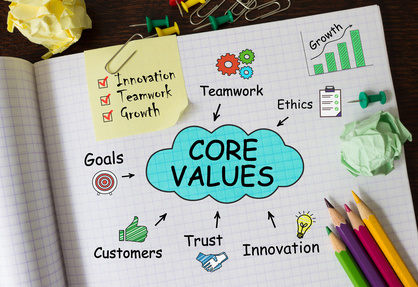 There is nothing better than working for an organization that has a great culture. It makes waking up and going to work each morning so much better! We spend so many of our waking hours at work that it’s no surprise a positive workplace culture is so high on employees’ ‘must-have’ list. While the work may be demanding, your company culture should not add stress to the day-to-day. In fact, it should inspire, motivate, and elevate enthusiasm. It may sound like a lofty goal, but it is attainable. Here are a few ways organizations can create a positive workplace culture:
- Establish clear organizational core values that are communicated effectively and make employees feel involved
- Foster collaboration and open and honest communication
- Create an inclusive work environment where employees are valued and supported
- Create clear goals and rewards for employees
A positive workplace culture improves teamwork, raises morale, increases productivity and efficiency, and results in employees who want stay with your organization. But it all begins with strong leadership and the desire to look at what’s working and what’s not. A cultural values assessment evaluates where your company culture currently stands, what’s missing, and establishes a plan to make effective change. To discuss conducting a cultural value assessment for your organization, please call Leah M. Joppy and Associates at 301-670-0051 or email us at leah@lmja.com.